
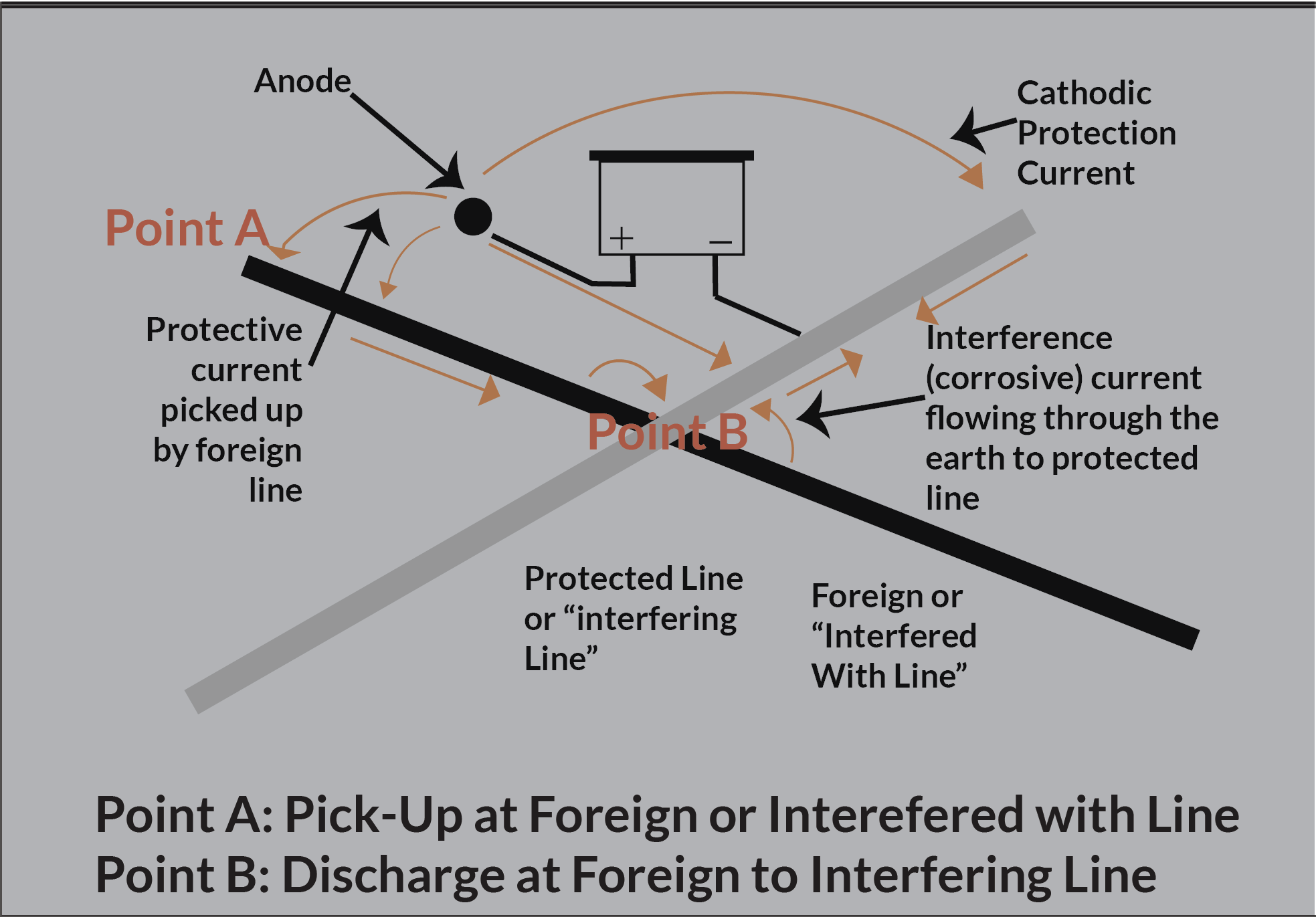
Stray DC interference is a known threat to pipeline integrity.
Most operators already have the tools to detect it.
But detection isn’t the problem.
Confirmation of External Corrosion at these locations is.
How do you know if external corrosion has actually occurred, especially when the pipeline can’t be pigged?
The Real Challenge Isn’t Interference. It’s What Happens Next
In DC interference environments, current doesn’t behave uniformly.
It enters the pipeline at one location and exits at another.
And it’s at those discharge points where the real risk exists:
- Current pickup locations are typically protected
- Current discharge locations can become highly anodic
- External Corrosion at these can be rapid and localized
The issue isn’t identifying interference zones
It’s determining whether those zones have already led to metal loss
Why Standard Surveys Leave a Critical Gap
Most integrity programs rely on:
- CP CIPS to assess cathodic protection behavior
- DCVG to locate coating defects and discharge points
These methods are essential for understanding conditions.
But they don’t answer the question that drives decisions:
❌ Has external corrosion already occurred?
Which leads to two common outcomes:
- Conservative programs → too many excavations
- Optimistic assumptions → missed corrosion
Neither is ideal.
The Limitation of Working Without ILI
For piggable pipelines, inline inspection provides direct answers.
For unpiggable pipelines, it doesn’t.
That means:
- Decisions rely on indirect indicators
Risk is interpreted, not confirmed - And in high-consequence areas like DC discharge zones, that uncertainty becomes operational risk.
A Shift in How External Corrosion by DC Interference Is Being Confirmed
To close this gap, some operators are moving beyond traditional workflows.
Instead of relying solely on electrical survey data, they are introducing a step that allows them to:
- Validate whether corrosion exists at identified discharge locations
- Differentiate between coating defects and actual metal loss
- Focus excavation efforts where they matter most
But the real shift isn’t just about adding a tool. It’s about integrating detection and confirmation into a single workflow
What This Means for Your Integrity Program
If you’re managing buried, unpiggable pipelines exposed to DC interference, this raises a key question:
Are your decisions based on risk indicators, or confirmed damage?
Because the difference directly impacts:
- Excavation costs
- Operational disruption
- Integrity confidence
See How the Integrated Approach Works
The full case study walks through a field-applied methodology that combines:
- Electrical interference detection
- Coating defect identification
- And above-ground corrosion confirmation
Including how each step informs the next—and how this reduces uncertainty in excavation decisions.
Download the full case study to explore the complete approach

 Copyright © 2025 Canchuks Corrosion Inc. Corrosion Experts